
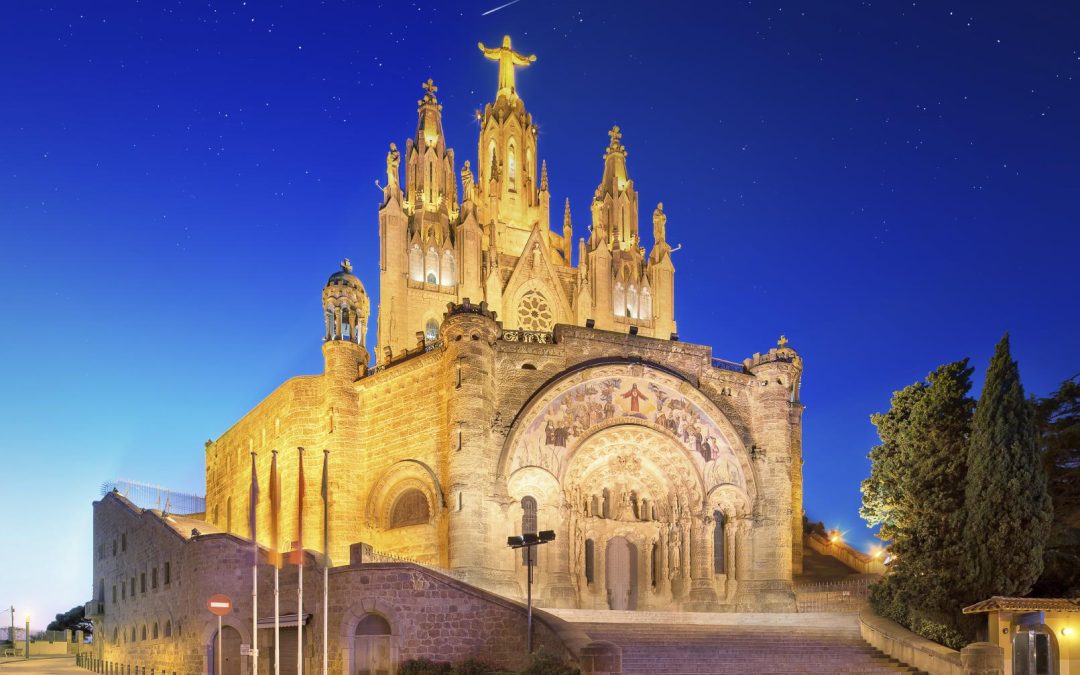
History, faith and a unique family connection above Barcelona
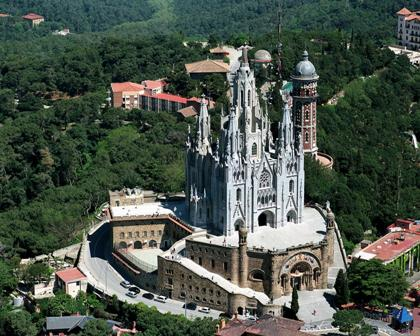
At the top of Tibidabo mountain, overlooking the city skyline, stands one of Barcelona’s most iconic and recognizable landmarks: the Expiatory Temple of the Sacred Heart. Beyond its impressive presence, its history reflects the spiritual, social and urban evolution of Barcelona, as well as a strong connection with our hotel family, which we are pleased to share with you in this post.
The connection between the Sacred Heart of Tibidabo and the Malagarriga family

Tibidabo is deeply linked to the history of the Malagarriga family. In the late 1950s, our father, José Mª Malagarriga Miralbell, took on the management of several establishments connected to the Andreu family, including the emblematic Hotel La Masía del Tibidabo, the Hotel Florida, and all the restaurants within the amusement park.
We therefore experienced first-hand key moments such as the inauguration of the Expiatory Temple of the Sacred Heart in 1961, the expansion of the amusement park in the 1970s, and the introduction of innovative initiatives for the time, such as the first buffet known as “La Taula Catalana”, launched together with our mother at the restaurant La Masía.
The origins of the temple shaped by its historical context
At the end of the 19th century, Tibidabo mountain attracted interest from various projects, including the possible construction of a Protestant church and a hotel-casino. In this context, an initiative promoted by Catholic groups emerged to consecrate the mountain to the Sacred Heart of Jesus.
In 1886, the landowner Salvador Andreu donated the land to the Italian priest John Bosco (canonized in 1934). Bosco was visiting Barcelona at the invitation of Dorotea de Chopitea, a great patron and key promoter of the project. A small provisional chapel was built, marking the beginning of the expiatory temple as an act of faith and spiritual devotion.
Construction and architecture: a long-term project
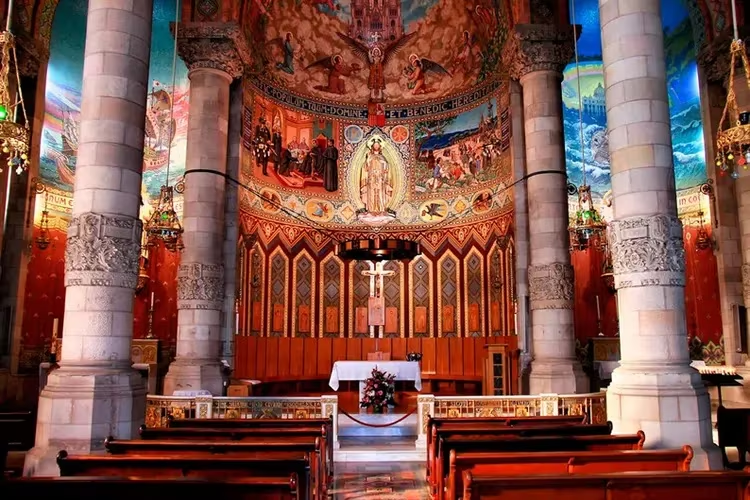
The construction of the temple began in 1902 under the direction of architect Enric Sagnier, one of Barcelona’s most prolific architects, and was completed in 1961 by his son, Josep Maria Sagnier.
The architectural complex consists of two levels:
- The lower crypt, in neo-Romanesque style, built with Montjuïc stone and richly decorated with mosaics depicting religious scenes and local traditions
- The upper temple, in neo-Gothic style, rising vertically and reinforcing the idea of spiritual elevation
At the very top stands the iconic sculpture of the Sacred Heart, created by Frederic Marès, replacing a previous statue destroyed during the Spanish Civil War. With open arms, the current figure symbolizes protection and welcome over the city.
After the conflict, a reconstruction process took place, culminating in the installation of the new sculpture in 1950 and the final completion of the temple in 1961.
A privileged viewpoint over Barcelona
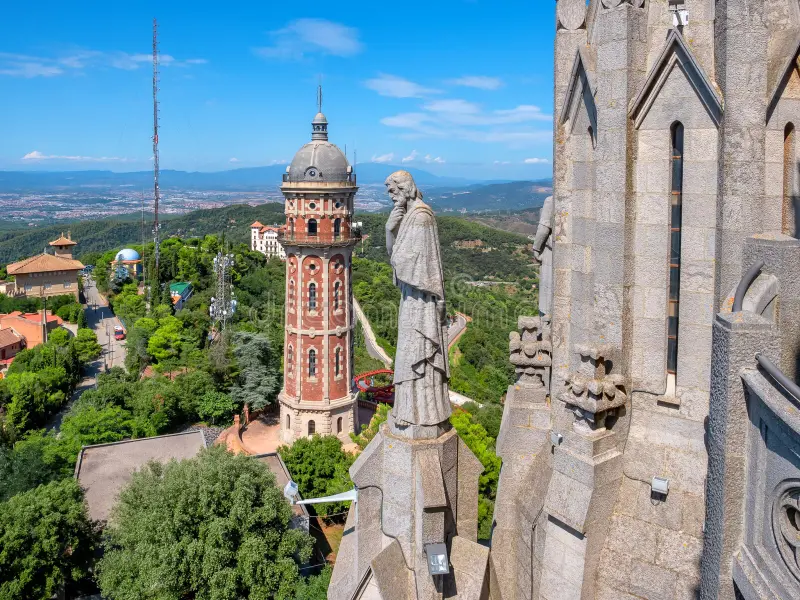
Beyond its religious significance, the temple is also one of the best viewpoints in the city. From its location in the Collserola mountain range, it offers an exceptional panoramic view that allows visitors to fully appreciate the scale and diversity of Barcelona.
We recommend taking the lift to the top of the Sacred Heart and enjoying breathtaking 360-degree views of the entire city. On clear days, you can even catch a glimpse of the Balearic Islands.
How to get there and visit recommendations
To reach Tibidabo, you can use public transport (funicular and shuttle buses) or private vehicle (parking is available, along with free mini-bus transfers).
We recommend visiting the following websites to help you plan and make the most of your visit:
- Information about visiting the temple and lift tickets
- Tibidabo amusement park official website
We hope you enjoy this unique experience and have a wonderful day visiting the Temple of the Sacred Heart of Tibidabo and its iconic amusement park.