
A story of heritage, hospitality and family tradition in the heart of Barcelona
By Javier Ortega Figueiral | 06 Mar 2026
We are pleased to reproduce on our blog this article originally published in The New Barcelona Post, written by journalist Javier Ortega Figueiral, to whom we express our sincere thanks for his interest and for highlighting the history of the Continental Palacete and the Malagarriga Vallet family. His text is part of the series Hotels with History and Stories of Hotels, dedicated to establishments with a distinctive character and historical legacy in the city of Barcelona.
After the quiet, global luxury with an Asian accent featured in the previous chapter, the twelfth instalment of Hotels with History and Stories of Hotels takes us somewhere unexpected. Central, yet unexpected.
There are no Michelin stars here, nor is it a property included in presentations by international investment funds — at least for now. Here there is something different: a building that was a house before becoming a hotel and that, quite literally, changed address without ceasing to be the same building. And which, moreover, remains a family affair.
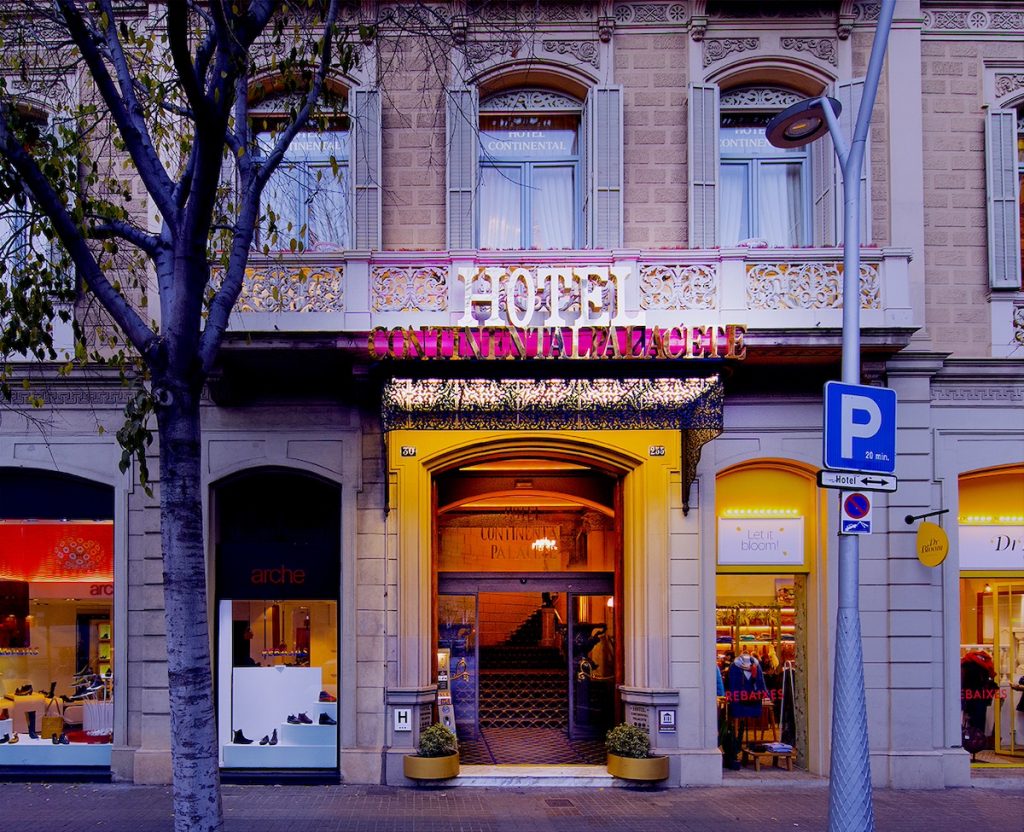
Barcelona has this kind of story. Buildings that, when you pause for a moment, turn out not to be exactly what they seem. We are heading to the corner of Diputació Street and Rambla de Catalunya, on the mountain/Besòs side of the chamfered corner. That point corresponds to number 30 on the Rambla. There stands the Continental Palacete. It seems as if it has always been there, in that precise spot in the Eixample. And yet, that was not the case.
The building was dismantled stone by stone and moved from its original location on Passeig de Gràcia to its current site. Today, such an operation would be almost unthinkable. Imagine the scene: balconies numbered, moldings carefully packed, blocks of stone transported hundreds of meters along Diputació Street as if someone had decided to play Lego on an urban scale. But this was how bourgeois Barcelona of the nineteenth century built — and rebuilt — itself.
The building known as Casa Paulina Fabra was originally conceived as a family residence during the euphoric expansion of the new Eixample, when the city competed in architectural elegance and every affluent family wanted to leave its mark in stone. Urban planning changes later altered street alignments and development plans, and the house eventually had to be moved to Rambla de Catalunya. It was not renovated: it was dismantled. And then rebuilt.
And then, a hotel
The transformation into a hotel arrived at the end of the twentieth century and began with a scene that was not particularly epic, but decisive. It was in 1997, in the waiting room of a dentist’s office — not a place where major business decisions are usually made. Pilar Vallet was leafing through La Vanguardia when a full-page advertisement caught her attention: “Palace house for sale. Ideal for offices.” Vallet immediately thought something else: what if it were a hotel?
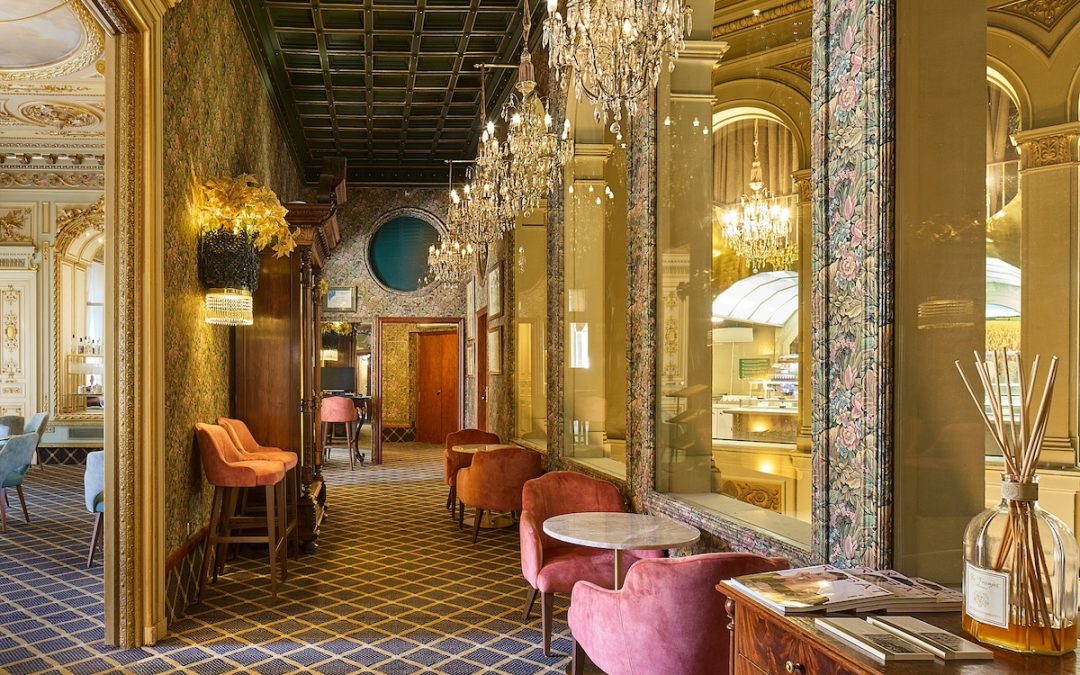
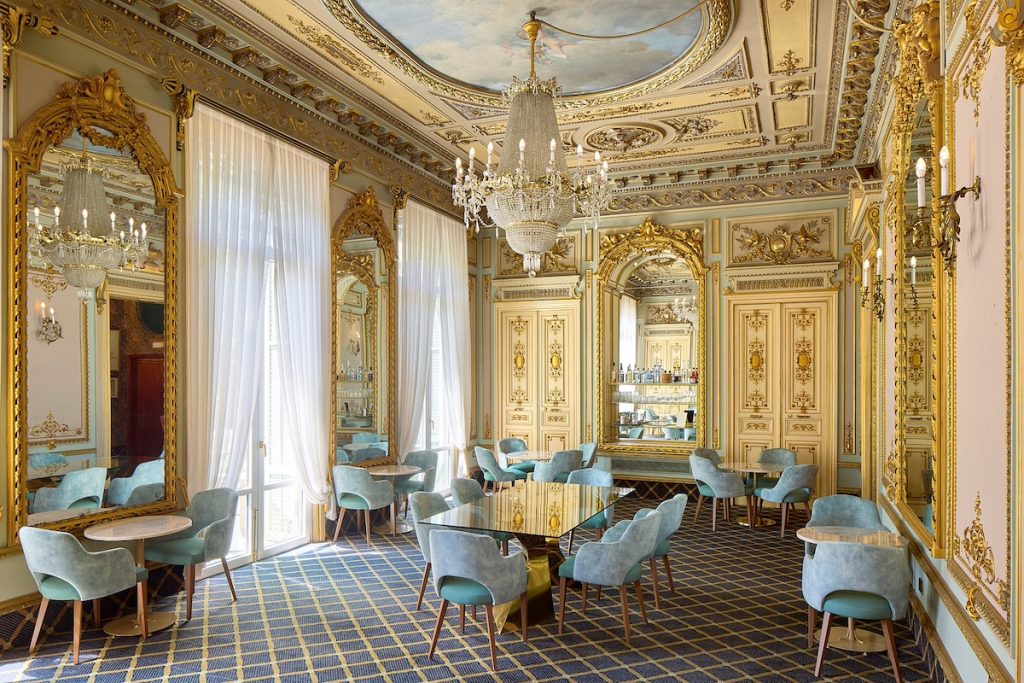
The Malagarriga Vallet family — mother and children — acquired the building and, after years of careful and respectful restoration, the palacete reopened in 2002 as a hotel. The opportunity was not used to create a hybrid concept. When you cross its doors, you do not enter a neutral lobby or a minimalist design reception. You step into a house that has chosen to remain one. There are coffered ceilings, chandeliers that shine because they were designed to do so, and salons that evoke gatherings from another era. Some consider it exuberant; others find it welcoming. In any case, it has personality. A great deal of it. And today, that is no small thing.
Pulling on the red thread, however, the story does not begin in 2002 — nor even in the twentieth century. It actually starts in 1826, when the Guild of Innkeepers and Tavern Owners of Barcelona issued a diploma recognizing Francisco Malagarriga i Munné as a full member, the grandson of master Cristóbal Malagarriga i Porta. The word “master” was not honorary: it referred to someone who had mastered the craft, someone who had made hospitality a qualified and recognized profession in the city. It was the official way of saying: here is someone who truly knows how to welcome guests and provide food with skill.
Honoring the date of that diploma, in 2026 the family celebrates two centuries of hospitality tradition. Two hundred years later, the craft remains essentially the same: to welcome, to care, to serve. With different buildings, different travelers and different circumstances, but with the same roots: the essence of hospitality and hotelkeeping.
Continental
By the end of the nineteenth century, the Gran Continental Hotel was already a meeting point in Plaça de Catalunya. Later it became a bank (the famous Banco Central known for the historic robbery) and eventually a large retail store (today the well-known Primark), proof that Barcelona changes its skin with remarkable ease.
After that original hotel had closed to become a bank, in 1931 — promoted by Francisco Malagarriga Fabra — the new Hotel Continental opened on La Rambla, inheriting the name of the original establishment. It was a first-class hotel equipped with all the comforts of the time, including an Arab-style salon that surprised visitors. A year later, it introduced a curious innovation at street level: the Bar Automatic.
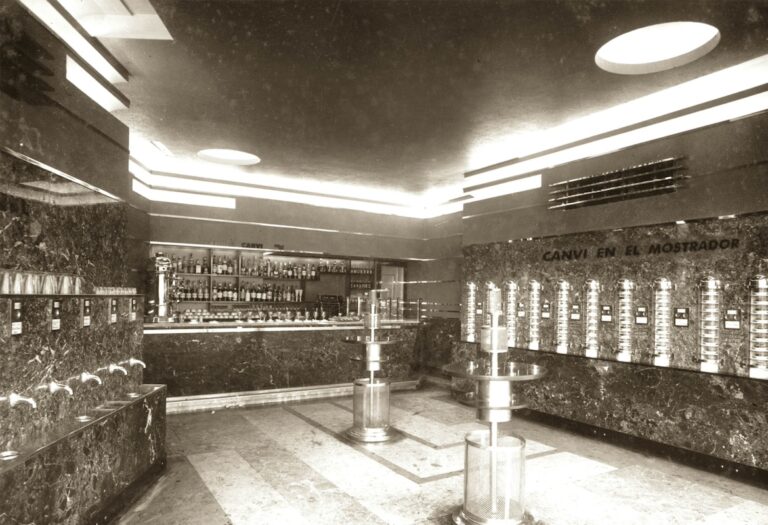
Using the Automatic was, for the time, almost futuristic. It operated with specially minted coins issued by the hotel itself and used a self-service system far ahead of its time, with modern aesthetics designed by architect Manuel Cases. Guests would insert the coin — not just any coin, but the Continental’s own — and the machine would dispense the drink. In 1932 this must have seemed like science fiction. Republican Barcelona was experimenting with modernity; Europe, as we know, would soon play a far less kind game.
The hotel on La Rambla lived through times of splendour as well as complex moments. During the Spanish Civil War it was confiscated and used as a place of rest. George Orwell stayed there with Eileen Blair before departing for the Aragon front to fight against fascism. The hotel appears in his autobiographical book Homage to Catalonia as a refuge amid disorder.
Over the years, the Continental once again became a cultural and sporting meeting place, the setting for celebrations and gatherings linked to FC Barcelona, and a witness to demonstrations and long nights around the Canaletes fountain. La Rambla below Plaça de Catalunya, with its almost permanent intensity, is the natural territory of the first Continental. Rambla de Catalunya, above the square, calmer and more residential, seemed the appropriate stage for the second act of the Malagarriga Vallet family.
A Palacete
The Continental Palacete was not conceived as a replica but as an extension of a family way of understanding hospitality. There is no obsession here with luxury labels. Instead, there is a simple gesture that has become one of the hotel’s hallmarks: a buffet open 24 hours a day for guests. Drinks, coffee and small snacks are always available. It may seem like a minor detail, but it says a lot. It is a hotel conceived as a comfortable house where there is always something in the kitchen. The kind of gesture that makes someone arrive at three in the morning and simply think: “thank goodness.”
Under the direction of JM Malagarriga — son of a renowned director of major Barcelona hotels such as La Rotonda, La Florida and Cap Sa Sal in Begur — the establishment has strengthened its connection with the city. Concerts and small-format musical sessions are held there, open to the public, periodically filling its salons. It is not only cultural programming, but also a reminder that hotels can be shared spaces for the neighborhood and the city, not just accommodation for travellers passing through.
While many establishments in Barcelona, whether deeply rooted or not, have changed ownership or management in line with financial operations and global brands, the two Continental hotels remain a family business. The building that was once a house, that was dismantled and rebuilt so it could continue to be lived in, eventually became a hotel without ever entirely ceasing to look like a house.
Cities change their uses with astonishing ease. Where there were once a grand hotel and two major banks, today there is an international low-cost store; where there was once a bourgeois residence, today there are travellers with cabin luggage or large suitcases. And yet, some stories remain.
Perhaps that is why it fits so well into this series that we publish every fifteen days in The New Barcelona Post. Because it is not only a hotel with history; it is a story that changed its address without losing its way. And that, in times like these, is a different kind of luxury — and certainly not the easiest one to find.